About This Collection
Printable Independence Day Coloring Pages
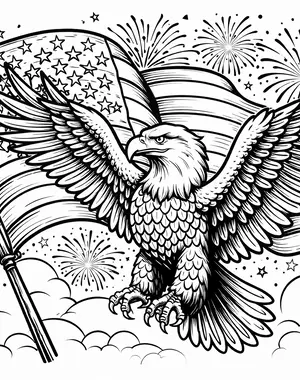
Browse free printable Independence Day patriotic worksheets with July Fourth symbols, celebration scenes, and classroom-ready holiday activities. This collection gathers flags, fireworks, Liberty Bell, parade, skyline, eagle, Uncle Sam, Capitol, picnic, wreath, and founding-document printables in one place.
The Historical Meaning of July 4th
Independence Day marks the adoption of the Declaration of Independence on July 4, 1776, when representatives of the thirteen colonies approved the text explaining why they considered themselves free from British rule. The decision for independence was voted on slightly earlier, but the Fourth became the date remembered because it was attached to the final adopted document. That is why the holiday is tied to a written declaration as much as to battle scenes or national symbols.
From the beginning, the day carried a strong public meaning. Bells, speeches, artillery, processions, and civic dinners turned the anniversary into a ritual of shared memory. The holiday was not only about private celebration. It was a yearly public retelling of how the nation said it began.
Fireworks, Flags, and Bells as July 4th Symbols
Fireworks became tied to Independence Day very early because they made celebration visible and communal after dark. Flags spread easily because they could be displayed at homes, schools, parades, and government buildings. The Liberty Bell became a patriotic symbol later, especially through historical memory and public storytelling, while the bald eagle represented the nation more broadly as an emblem of the United States. The Statue of Liberty belongs to a later period, but it became connected to American freedom and therefore slid naturally into July 4 imagery.
Those symbols do not all come from 1776 itself. They come from different moments in national history. The holiday's imagery was assembled over time, not born complete on one summer day.
July 4th Celebrations Across America
Independence Day changes from region to region. Large cities may focus on skyline fireworks, waterfront events, and major concerts. Small towns may lean more on parades, marching bands, local fairs, and decorated bicycles. Family cookouts, baseball games, and community picnics also became part of the holiday because July 4 lands in midsummer, when outdoor life is easy to mix with civic celebration.
That is why an Independence Day collection works best when it includes both historical symbols and everyday summer scenes. The holiday is a blend of document history, patriotic imagery, and local custom. A useful hub should teach all three instead of reducing the day to generic fireworks alone.
Using the Independence Day Pages
Use the Independence Day collection when you want several patriotic printables together for summer activities, holiday events, classroom history tie-ins, or quick July Fourth coloring time at home.
For simple patriotic symbols, start with the flag, eagle, or Liberty Bell pages. For larger celebration scenes, choose parade, skyline, family barbecue, or fireworks pages with more details to color.
Families search this holiday in several ways, including Fourth of July, July Fourth, July 4, 4th of July, and even 7/4, so this collection helps gather all of those printables in one place.
4th of July Coloring FAQ
What happened on July 4, 1776?
The Continental Congress adopted the Declaration of Independence. Declaration of Independence and Signing the Declaration show the document and the moment.
What is the Liberty Bell known for?
The Liberty Bell hangs in Philadelphia and is famous for its crack. It became a symbol of American liberty, and Liberty Bell with Stars and Ribbon shows it.
Who is Uncle Sam?
Uncle Sam is a figure who stands for the United States government. The name is often linked to Samuel Wilson, a New York meat packer who supplied the army in the War of 1812. See Uncle Sam Hat and Balloons and Uncle Sam Sparkler.
Which designs teach American history?
Declaration of Independence, Signing the Declaration, Paul Revere Midnight Ride, Washington Crossing the Delaware and US Constitution, which are gathered in the American History gallery.
Are there fireworks designs for younger children?
Yes. Kids with Sparklers and Independence Day Flag with Fireworks are friendly starting points, and the Fireworks gallery collects every fireworks design in one place.