
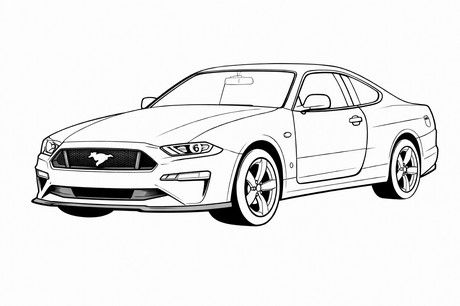
Ford Mustang: History & Fun Facts
The Ford Mustang galloped onto the scene at the 1964 World’s Fair in New York and immediately captured the imagination of car lovers. Ford created a new class called the “pony car” by combining a sporty long‑hood/short‑deck design with an affordable price. The first model year was so successful that more than 400,000 Mustangs were sold by the end of 1965. Early cars offered options like a 289‑cubic‑inch V‑8 engine, a convertible top and bright colors that let buyers express their personality.
Through the 1960s and 1970s the Mustang evolved rapidly. High‑performance versions like the Shelby GT350 and Mach 1 delivered impressive horsepower, while later models grew larger and more luxurious. In 1979 the Mustang switched to a new “Fox body” platform that carried it through the 1980s and early 1990s. The fourth generation in 1994 brought a modern shape and airbags; the fifth generation in 2005 revived retro styling cues. Today’s sixth generation offers powerful EcoBoost four‑cylinder and V‑8 engines, independent rear suspension and advanced technology like launch control. A fully electric “Mustang Mach‑E” crossover has even joined the family.
Fans of the Mustang often attend car shows to see special editions and restored classics. You can create a scrapbook of different Mustang generations, noting the years, engines and design features that make each one unique. Discuss how the Mustang’s role has shifted from an inexpensive sporty car to a cultural icon that appears in movies, songs and toy collections. Thinking about why the Mustang remains popular after six decades will help you appreciate how design and engineering can create lasting legends.
The Ford Mustang page points to a specific branch of vehicle history, not just cars in general. The road car style grew out of practical needs such as hauling cargo, carrying families, traveling long distances, or adapting to new technology. Over time, each model line built its own reputation through shape, size, and the kind of work or driving it was associated with. Details in the name matter too, because a heavy-duty truck, midsize pickup, city car, or electric design all tell different stories about what drivers wanted. That is why this vehicle feels tied to its own identity rather than to a generic machine.
Ford Mustang Coloring Page brings up the kinds of vehicle questions people usually ask first: what class it belongs to, what job it is built for, and what features make it easy to recognize. Cars, trucks, SUVs, taxis, and emergency vehicles may all share wheels and road use, but they solve very different problems. Some are built for family space, some for cargo, some for performance, and some for public service. That practical purpose is why vehicle history is often easier to understand once you look at use first and styling second.
Another common question is how a familiar vehicle changes over time without losing its identity. Nameplates and vehicle types often pass through many updates in engines, body shape, safety equipment, and interior design, yet people still recognize the same basic model or role. Buyers compare towing, seating, ride comfort, performance, storage, and durability depending on the class. Even fictional or unusual designs stay memorable because they exaggerate features that people already associate with power, speed, utility, or technology.
Vehicles also become historic because they belong to larger systems. Taxis connect to cities, emergency vehicles connect to public safety, pickup trucks connect to work and hauling, and performance cars connect to enthusiasm and design culture. A single model or type becomes important once enough people use it, compare it, or remember it across generations. That is why vehicle pages invite more than one kind of question at once: not just what the machine looks like, but where it fits in everyday life and how it earned recognition.
More Vehicle Coloring Pages

How to Use This Worksheet
Download this free printable coloring sheet or print instantly. Great for kids, preschool, and classroom activities.
The Ford Mustang is an American icon, and this free Mustang coloring sheet gives young car enthusiasts a chance to put their own color spin on one of the most beloved sports cars in history. Will they go classic Mustang red? Race yellow? Electric blue? The possibilities are as exciting as the car itself.
Frequently Asked Questions
Is the Ford Mustang coloring page free?
Yes — this Ford Mustang printable is completely free for personal and classroom use. Download the PNG file or use the Print buttons for a perfectly sized PDF on US Letter or A4 paper.
What colors should I use to color this vehicle?
Look at the real vehicle for color reference, or go creative with your own scheme. Most vehicles look best with consistent body color, darker shades for tires and undercarriage, and lighter or metallic tones for glass and chrome details. Shading one side slightly darker than the other adds great depth.
What age is this coloring page suitable for?
These coloring sheets work well for a wide age range. The bold outlines are easy for toddlers and preschoolers (ages 2–4) to color freely, while the subject detail gives older children (ages 5–10) plenty to work with. Many adults enjoy them too.
Can I use this coloring page in my classroom or homeschool?
Yes. All coloring sheets on PrintColoringSheet.com are free for personal and non-commercial educational use, including classrooms, homeschool settings, libraries, and after-school programs. Print as many copies as you need.