
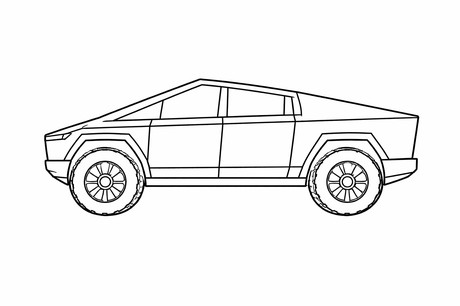
Tesla Cybertruck side view: History & Fun Facts
Viewing the Tesla Cybertruck from the side reveals just how different it is from other pickups. Its wedge‑shaped profile reduces aerodynamic drag, helping the electric truck travel farther on a single charge. The Cybertruck’s body panels are made from cold‑rolled stainless steel similar to that used on SpaceX rockets, giving it strength and a distinctive metallic sheen. A single, unbroken line runs from the nose to the rear, forming a protective shell around the cabin and bed.
Inside, the Cybertruck is expected to seat six people on two benches. The dashboard features a large central touchscreen that controls most functions, as is typical for Tesla vehicles. The rear bed is over six feet long and includes hidden compartments for extra storage. Because there is no traditional engine, there’s additional storage under the front hood, called a “frunk.” All versions of the Cybertruck will likely include Tesla’s advanced driver‑assistance technology, which uses cameras and sensors to help steer, brake and park.
When studying the Cybertruck’s design, consider why engineers chose to depart so radically from conventional truck shapes. Ask how the shape affects things like wind resistance and interior space. You might also explore the pros and cons of using stainless steel instead of painted steel or aluminum. Thinking critically about these design choices helps children understand how engineers solve problems in new ways and how those solutions can change the look and function of everyday vehicles.
The Tesla Cybertruck Side View page points to a specific branch of vehicle history, not just cars in general. The electric truck style grew out of practical needs such as hauling cargo, carrying families, traveling long distances, or adapting to new technology. Over time, each model line built its own reputation through shape, size, and the kind of work or driving it was associated with. Details in the name matter too, because a heavy-duty truck, midsize pickup, city car, or electric design all tell different stories about what drivers wanted. That is why this vehicle feels tied to its own identity rather than to a generic machine.
Tesla Cybertruck side view Coloring Page brings up the kinds of vehicle questions people usually ask first: what class it belongs to, what job it is built for, and what features make it easy to recognize. Cars, trucks, SUVs, taxis, and emergency vehicles may all share wheels and road use, but they solve very different problems. Some are built for family space, some for cargo, some for performance, and some for public service. That practical purpose is why vehicle history is often easier to understand once you look at use first and styling second.
Another common question is how a familiar vehicle changes over time without losing its identity. Nameplates and vehicle types often pass through many updates in engines, body shape, safety equipment, and interior design, yet people still recognize the same basic model or role. Buyers compare towing, seating, ride comfort, performance, storage, and durability depending on the class. Even fictional or unusual designs stay memorable because they exaggerate features that people already associate with power, speed, utility, or technology.
Vehicles also become historic because they belong to larger systems. Taxis connect to cities, emergency vehicles connect to public safety, pickup trucks connect to work and hauling, and performance cars connect to enthusiasm and design culture. A single model or type becomes important once enough people use it, compare it, or remember it across generations. That is why vehicle pages invite more than one kind of question at once: not just what the machine looks like, but where it fits in everyday life and how it earned recognition.
More Vehicle Coloring Pages
How to Use This Worksheet
Download this free printable coloring sheet or print instantly. Great for kids, preschool, and classroom activities.
The side profile of the Tesla Cybertruck is just as dramatic as its front — those uncompromising straight lines and angular geometry make it look unlike anything else on the road. This coloring sheet lets kids appreciate the full geometric boldness of the Cybertruck from its most architectural angle.
Frequently Asked Questions
How fast is the Tesla Cybertruck?
The Cyberbeast version accelerates from 0–60 mph in 2.6 seconds — faster than most sports cars. The dual-motor AWD does 0–60 in 4.1 seconds and the single-motor RWD in 6.5 seconds. The Cyberbeast also has a 320-mile EPA range.
What makes the Cybertruck's design so different?
The Cybertruck's stainless steel construction can't be stamped into curves like traditional car panels, so the design uses flat planes and sharp folds instead. This constraint became the defining aesthetic — what started as an engineering limitation became a radical design statement unlike anything else on the road.
Is this coloring page free to download and print?
Yes, completely free. Every coloring sheet on PrintColoringSheet.com is free for personal and non-commercial classroom use. No sign-in, no subscription, and no watermarks — just click Download or Print and you're ready to color.
What age is this coloring page suitable for?
These coloring sheets work well for a wide age range. The bold outlines are easy for toddlers and preschoolers (ages 2–4) to color freely, while the subject detail gives older children (ages 5–10) plenty to work with. Many adults enjoy them too.