
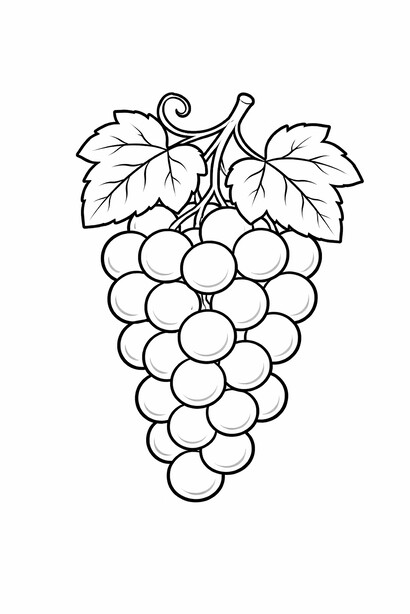
Grapes: History & Fun Facts
Grapes are among the oldest cultivated fruits, with a history tied closely to vineyards, trade, and ancient agriculture. People grew grapes in parts of the Caucasus, the Mediterranean, and the Near East thousands of years ago, and the fruit later spread through Europe and many other regions. Grapes became important not only as fresh fruit but also for raisins, juice, and wine, which gave them a major role in farming and commerce. Because grapes grow in hanging bunches rather than as separate fruits on a flat branch, their natural cluster shape became central to how artists, gardeners, and merchants chose to picture them.
This page uses a grape cluster with leaves because the leaf-and-bunch combination is the classic vineyard image. The bunch shows the many round fruits packed together, while the leaves help the picture feel connected to the vine instead of looking like loose berries. In old decorative borders, labels, and harvest artwork, grape leaves often mattered just as much as the fruit because they signaled vineyards and trellises right away. That visual shorthand is still strong today. Even without color, a hanging cluster and a few shaped leaves can instantly say grapes in a way that a handful of separate circles never could.
Grape imagery also carries a long decorative history. It appears in stone carvings, pottery, textiles, restaurant signs, and old food packaging because the fruit cluster has a rich, flowing pattern that artists enjoy repeating. Grapes could look elegant in formal art and still feel familiar in everyday market scenes. That combination helped keep the cluster one of the most durable fruit motifs in design. A coloring page based on that form connects to more than a produce item. It reflects orchard and vineyard traditions, ancient farming, and a long visual habit of showing grapes as a full hanging bunch framed by broad vine leaves.
There are many different kinds of grapes, and they are usually grouped by how they are used. Table grapes are grown for fresh eating, wine grapes are chosen for sugar, acid, and flavor balance, and some varieties are dried into raisins. The vines themselves can live for many years if managed well, which is one reason old vineyards are often treated with special respect. Unlike orchard trees, grape plants are climbing vines trained along supports, wires, or trellises. Growers prune them very carefully because the crop depends on how the vine is shaped and how much energy it sends into fruit instead of excess leaf growth.
Grapes grow in many regions, but the best-known vineyard areas usually combine warm sunny days with a seasonal climate that lets the fruit ripen gradually. Harvest season often falls from late summer into autumn, depending on the region and the variety. Grapes are common worldwide, but the exact types can be surprisingly local, with some cultivars strongly tied to particular valleys, countries, or traditions. Even table grapes can differ widely in color, seed content, skin thickness, and sweetness. That variety helps explain why grapes can feel both ordinary as a lunch fruit and highly specialized when people talk about vineyards, harvest timing, and regional growing conditions.
More Fruit Coloring Pages
How to Use This Worksheet
Download this free printable coloring page or print instantly. Great for kids, preschool, and classroom activities.
A grape cluster is a classic fruit coloring subject because the repeated round shapes make the bunch easy to spot.
Frequently Asked Questions
Is this grapes coloring page free?
Yes. This fruit coloring page is free to print or download for personal and classroom use.
Is this coloring page free to download and print?
Yes, completely free. Every coloring sheet on PrintColoringSheet.com is free for personal and non-commercial classroom use. No sign-in, no subscription, and no watermarks — just click Download or Print and you're ready to color.