
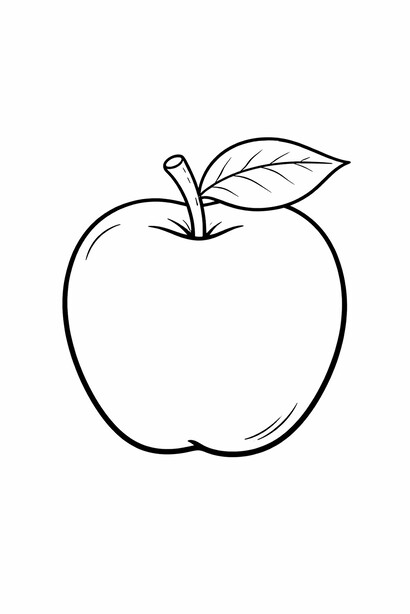
Apple: History & Fun Facts
Apples have been cultivated for thousands of years, and many historians trace their oldest roots to Central Asia, especially the region around modern Kazakhstan. From there, apples spread across trade routes and were grown in orchards throughout Europe and later North America. Because apples store well and come in many varieties, they became one of the most dependable fruits in everyday life. That steady presence made them common in paintings, harvest decorations, recipe books, and schoolroom imagery. A single apple with a stem and leaf became such a familiar symbol that people could recognize it instantly, even in the simplest black-and-white drawing.
The classic apple shape shown on this page is not accidental. A rounded fruit with a small dip at the top, a short stem, and one leaf has become the standard way apples are pictured in children's books, classroom posters, and grocery logos. That clean design works because it reduces the fruit to its most recognizable clues without losing accuracy. Even when real apples vary by variety, color, and size, the basic silhouette remains strong. Artists have relied on that silhouette for generations, which is why an apple coloring page can stay simple and still feel complete. The leaf helps reinforce the orchard look right away.
Apples also carry a heavy cultural history outside the orchard. They appear in folktales, myths, school traditions, and sayings about harvest time and health. In many places, apple picking became a seasonal family tradition, while apple pies, ciders, and preserves helped turn the fruit into a symbol of autumn and home cooking. That broad cultural role explains why apple pictures appear far beyond farm books. They show up in recipe cards, labels, classroom themes, and decorative prints. A page called apple with leaf works well because it connects the fruit's farming history with the simple visual form that people have learned to recognize almost everywhere.
Apples come in a huge range of varieties, which is one reason they are such an important fruit in orchards and home gardens. Some varieties are crisp and sweet for fresh eating, while others are prized for baking, sauce, or cider. Familiar names such as Fuji, Gala, Honeycrisp, Granny Smith, and Golden Delicious show how much flavor, texture, and ripening time can vary within one fruit. Apple trees themselves can also vary in size depending on rootstock. Some orchard trees are kept smaller for easier harvest, while older standard trees can grow much larger and broader over time if they are not heavily controlled.
Apple trees usually bloom in spring and bear fruit that ripens from late summer into autumn, depending on the variety and the region. Commercial growers often plant several varieties together because pollination matters, and many apple trees produce better crops when another compatible apple is blooming nearby. Apples are extremely common in temperate regions, but they still depend on a real winter chill period, which means they are better suited to cooler seasonal climates than truly tropical areas. That combination of many varieties, orchard management, and climate needs makes the apple more complex than its simple familiar shape might suggest.
More Fruit Coloring Pages
How to Use This Worksheet
Download this free printable coloring page or print instantly. Great for kids, preschool, and classroom activities.
This apple page keeps the shape clear and familiar, which makes it easy for younger children to recognize and color.
Frequently Asked Questions
Is this apple coloring page free?
Yes. This fruit coloring page is free to print or download for personal and classroom use.
Is this coloring page free to download and print?
Yes, completely free. Every coloring sheet on PrintColoringSheet.com is free for personal and non-commercial classroom use. No sign-in, no subscription, and no watermarks — just click Download or Print and you're ready to color.