
Cherry: History & Fun Facts
Cherries have been grown for a very long time, with ancient forms known in regions around Europe and western Asia. The fruit spread through cultivation and trade until cherry trees became a familiar part of orchards, gardens, and seasonal markets. Sweet cherries and sour cherries developed different uses, from fresh eating to baking and preserves, but both helped make the cherry an iconic fruit in art and decoration. Because cherries are small and often hang in pairs, artists quickly discovered that two connected cherries on a stem created a neat, balanced image. That paired look became one of the most recognizable fruit symbols in printed design.
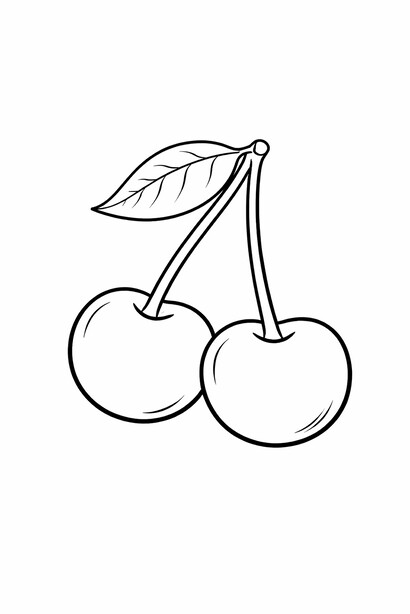
This page focuses on two cherries with a leaf because the pairing says more than a single cherry alone. The joined stems create a graceful shape that has appeared on fruit crate labels, kitchen fabrics, menu art, and retro signs for decades. One leaf helps the picture feel fresh from the tree rather than loose on a table. In a coloring page, those details matter because cherries are small fruits and need strong visual clues. The twin fruits, the crossing stems, and the leaf work together to tell the viewer exactly what the page shows. That is why the two-cherry arrangement has lasted so long in popular illustration.
Cherry pictures also carry strong seasonal associations. In many places, cherries signal early summer, orchard harvests, and fresh market stands. Cherry blossom festivals celebrate the tree before the fruit even arrives, which gives cherry imagery an added layer of meaning tied to spring and seasonal change. Later in the year, cherries appear again in pies, jams, desserts, and decorative kitchen art. The fruit therefore travels through several visual traditions in one year, from blossoms to harvest to preserved treats. A page built around two cherries with a leaf captures the most lasting part of that tradition: a small, elegant orchard fruit shown in its simplest familiar form.
Cherries are usually divided into two broad groups: sweet cherries and sour cherries. Sweet cherries are often eaten fresh, while sour cherries are especially popular for pies, preserves, and baking. The trees can vary in size, but many cherry trees become medium to fairly large orchard trees if not kept pruned. They are among the earlier stone fruits to ripen in many places, which is why cherry season often feels short and eagerly anticipated. Because the fruit bruises easily and the harvest window can be narrow, fresh cherries are sometimes more delicate and seasonal than apples or oranges in everyday markets.
Cherry growing is strongly tied to climate. Trees need winter chill to set fruit well, and blossoms can be vulnerable to late frosts in spring. That makes some years much better than others depending on weather. Major cherry regions include parts of the United States, Europe, and western Asia, but exact timing changes with latitude and elevation. Cherries are common enough to be familiar, yet they are still more seasonal and somewhat less constant in stores than sturdier fruits such as bananas or apples. Their short fresh season is part of what gives cherries their special reputation as an early-summer fruit worth waiting for.
More Fruit Coloring Pages
How to Use This Worksheet
Download this free printable coloring page or print instantly. Great for kids, preschool, and classroom activities.
Two joined cherries are one of the most familiar fruit images in coloring books and food illustrations.
Frequently Asked Questions
Is this cherry coloring page free?
Yes. This fruit coloring page is free to print or download for personal and classroom use.
Is this coloring page free to download and print?
Yes, completely free. Every coloring sheet on PrintColoringSheet.com is free for personal and non-commercial classroom use. No sign-in, no subscription, and no watermarks — just click Download or Print and you're ready to color.