
Strawberry: History & Fun Facts
Strawberries have an unusual history because wild strawberries were known in many parts of the world long before the large modern garden strawberry became common. People gathered small woodland strawberries in Europe and elsewhere, but the larger fruit many people know today grew out of later hybrid development, especially in France during the eighteenth century. That means the strawberry most children picture is partly the result of farming history and selective breeding. Even so, the fruit kept its most recognizable features: a pointed heart-like shape, tiny seeds on the outside, and a leafy cap. Those features made strawberries especially easy to turn into memorable drawings.
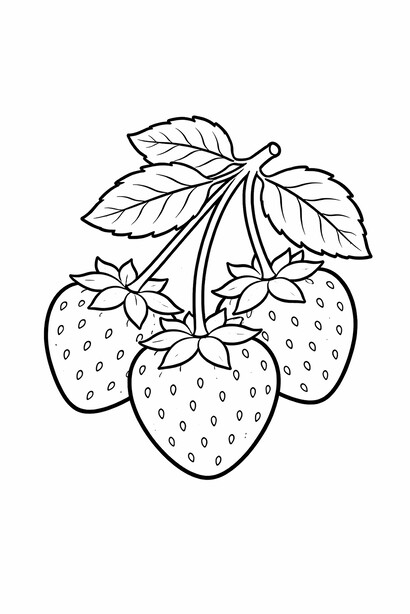
The page shows three strawberries on a branch because strawberries are often pictured in clusters rather than as a single fruit floating alone. A small grouping gives the page a more natural garden look and hints at how strawberries spread through runners, leaves, and low-growing plants. It also helps viewers compare shapes and sizes within one image. Educational fruit charts and seed packets often used little clusters for the same reason. One berry might show the basic form, but several berries with stems and leaves suggest a real plant. That extra context turns a simple fruit picture into something that feels closer to a patch, garden bed, or produce basket.
Strawberries became a strong symbol in food art because they are easy to identify even without color. Their seeds, leafy tops, and pointed shape do most of the work. In printed labels, recipe cards, dessert packaging, and garden books, artists often repeated the same cluster arrangement seen on this page because it immediately suggested freshness and summer harvest. A branch with three berries feels more specific than a general strawberry icon, and that specificity helps the page stand out. It hints at real growing habits, not just a decorative fruit symbol. That is why this page works best as a small branch scene instead of a generic single strawberry outline.
Strawberries are small plants rather than trees, and they spread using runners that grow outward and root into new plants. That growth habit is one reason strawberry patches can expand quickly when cared for well. Modern garden strawberries come in different types, including June-bearing varieties with one strong crop, everbearing types with a longer season, and day-neutral varieties that can produce across a broader stretch of warm weather. The plant itself stays low, but the fruiting and runner pattern makes strawberries especially productive in garden rows, raised beds, and commercial fields where growers can manage sun, mulch, and moisture carefully.
Strawberry season depends heavily on region, but in many places the main harvest arrives in late spring or early summer. The fruit is common and widely loved, yet it is also relatively delicate, which means timing, transport, and freshness matter a lot. Strawberries do not keep as long as apples or citrus, so local harvest season is a bigger deal for them. They are grown in many temperate regions and in some mild climates almost year-round through careful farming. Because the fruit is soft and perishable, strawberries often feel especially seasonal, and that short peak is one reason fresh local strawberries are prized more than berries shipped long distances.
More Fruit Coloring Pages
How to Use This Worksheet
Download this free printable coloring page or print instantly. Great for kids, preschool, and classroom activities.
This strawberry page feels natural because the berries are shown together on a small branch with leaves.
Frequently Asked Questions
Is this strawberry coloring page free?
Yes. This fruit coloring page is free to print or download for personal and classroom use.
Is this coloring page free to download and print?
Yes, completely free. Every coloring sheet on PrintColoringSheet.com is free for personal and non-commercial classroom use. No sign-in, no subscription, and no watermarks — just click Download or Print and you're ready to color.