
Orange: History & Fun Facts
Oranges have a long travel story that begins in Asia, where citrus fruits were cultivated long before they became common in Europe or the Americas. Sweet oranges moved west along trade routes and eventually became an important crop in warm regions such as Spain, Portugal, Florida, and California. Because they were fragrant, bright, and easy to recognize, oranges often appeared in still-life paintings, grocery signs, and fruit crate labels. Over time, the orange became one of the most familiar fruits in the world. Its round shape and textured peel made it a natural subject for simple drawings, posters, and school food pictures.
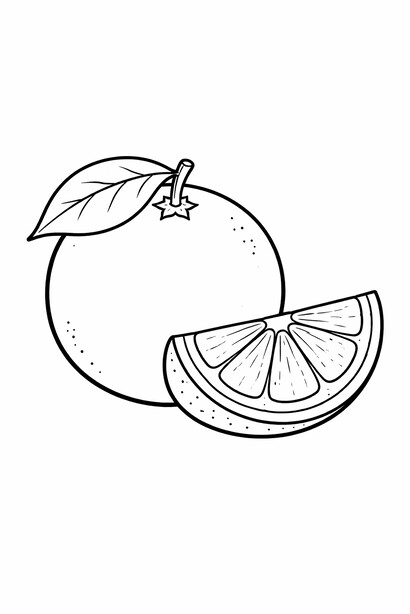
This page uses one whole orange beside a slice because that pairing instantly explains the fruit. The whole fruit shows the peel, leaf, and rounded outer shape, while the slice reveals the wedge pattern inside. That inside pattern helped oranges become one of the easiest fruits to identify in printed pictures. Cookbook illustrations, juice ads, and classroom nutrition charts often used exactly this contrast between outside and inside. The slice was not just decorative. It told viewers that oranges were a segmented citrus fruit, different from apples, peaches, or pears. In a simple coloring sheet, that one extra cut section gives the page much more meaning.
Orange-growing regions built entire local identities around citrus harvests, packing houses, and fresh fruit markets. Decorative orange crate labels from the late nineteenth and early twentieth centuries turned everyday produce into bold printed art, often using leaves, blossoms, and cross-sections to make the fruit look lively. That visual tradition still affects how oranges are drawn now. A modern coloring page with a whole orange and slice feels familiar because generations of people have already seen that arrangement on labels, menus, recipe books, and market displays. The page may look simple, but it carries a long visual history shaped by farming, trade, and fruit advertising.
There are several major kinds of oranges, and they are not all used in the same way. Navel oranges are popular for eating fresh because they peel relatively easily and have a sweet flavor. Valencia oranges are widely used for juice because they are very juicy and often ripen later in the season. Blood oranges are known for their deep red flesh, while mandarins and related easy-peel citrus are smaller and simpler to separate into sections. Many orange trees stay manageable in orchards or home gardens, but they can still grow into medium-sized evergreen trees when allowed to mature in warm climates with enough sun.
Orange trees usually flower with fragrant white blossoms before the fruit develops, and growers often watch both bloom timing and heat conditions carefully. In major citrus regions, harvest season depends on the variety, with some oranges ready in cooler months and others held later for spring or summer markets. Oranges are extremely common rather than rare, but growing them well still requires the right climate, protection from hard freezes, and good water management. That balance between being very familiar in stores and more selective in where they can grow helps explain why oranges are tied so strongly to warm regions such as Florida, California, the Mediterranean, and parts of Brazil.
More Fruit Coloring Pages
How to Use This Worksheet
Download this free printable coloring page or print instantly. Great for kids, preschool, and classroom activities.
This orange page shows one whole fruit next to a slice so children can recognize both the peel and the citrus segments.
Frequently Asked Questions
Is this orange coloring page free?
Yes. This fruit coloring page is free to print or download for personal and classroom use.
Is this coloring page free to download and print?
Yes, completely free. Every coloring sheet on PrintColoringSheet.com is free for personal and non-commercial classroom use. No sign-in, no subscription, and no watermarks — just click Download or Print and you're ready to color.